
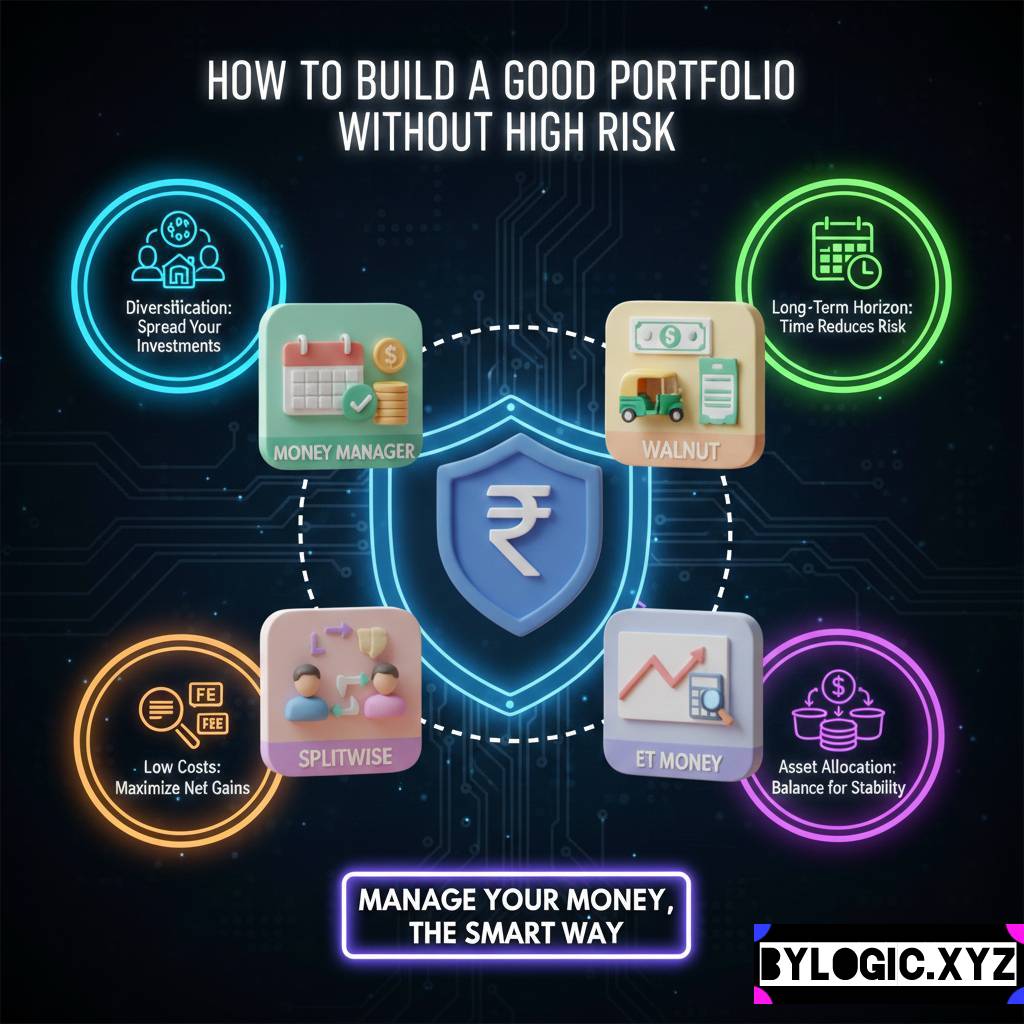
Everyone wants the “secret sauce” for a portfolio that grows like a weed but stays as steady as a rock. In reality, most people end up doing the opposite: they chase high-risk “multibagger” tips they heard at a dinner party and end up losing sleep when the market dips by even 2%. To build a good portfolio, focus on diversification, consistent investing, and aligning assets with your long-term financial goals.
Building a portfolio that doesn’t keep you awake at night isn’t about being a genius. It’s about being disciplined and understanding that “low risk” doesn’t mean “no growth.” It just means you aren’t gambling your hard-earned money on a single roll of the dice. If you’re looking for a way to grow your wealth without the heart palpitations, you’ve come to the right place.
YOU CAN ALSO READ:
Digital fraud prevention tips banks don’t teach customersThe Story of Two Cousins: Sameer vs. Rahul
Let’s look at a real-life scenario I’ve seen play out dozens of times. Sameer and Rahul both started investing with ₹50,000 a month in 2021.
Sameer wanted to get rich fast. He put everything into small-cap stocks and crypto. For six months, he looked like a hero. His portfolio was up 40%. Then, the market corrected. Those small caps fell by 50%. Panic set in, and Sameer sold everything at a loss, swearing that the stock market is a “scam.”
Rahul took a “boring” path. He sat down and decided on a 60-40 split. 60% went into a Nifty 50 Index fund and a few stable blue-chip companies. 40% went into Debt funds and PPF. When the market crashed, Rahul’s equity portion fell, but his debt portion stayed steady. His total portfolio only dipped by about 12%. He didn’t panic. In fact, he used some of his debt money to buy more equity while it was cheap.
The Lesson: Risk isn’t just about how much you can make; it’s about how much you can handle emotionally without making a stupid mistake. Sameer had a “high return” strategy but a “low-stress” personality. That mismatch destroyed his wealth.
Myth vs. Reality: The Truth About Safety
There are so many misconceptions about what makes an investment “safe.” Let’s clear the air with a bit of a reality check.
| The Myth | The Reality | The Numbers Insight |
| Fixed Deposits (FDs) are the safest. | Inflation and taxes eat FDs for breakfast. | If inflation is 6% and your FD gives 7%, after 30% tax, you are actually losing money. |
| Gold is the best low-risk asset. | Gold is actually quite volatile in the short term. | Gold can stay flat for 5-8 years before a sudden jump. It’s a hedge, not a primary grower. |
| Large-cap stocks can’t crash. | Even giants like Reliance or HDFC can fall 20-30%. | Diversification across sectors is more important than just buying “big” names. |
The Opinionated Take: A lot of people think staying in cash or FDs is “low risk.” I disagree. In my view, the highest risk is not having enough money to retire because you were too scared to beat inflation. Real safety comes from a balanced mix of assets that talk to each other. When one goes down, the other holds the fort.
How to: Build Your “Sleep-Well” Portfolio
If you’re starting from scratch or trying to fix a messy portfolio, follow this step-by-step logic. It’s not flashy, but it works.
1. Define Your “Safety Net” First
Before you even touch a mutual fund, you need an emergency fund. This should be 6-12 months of your expenses sitting in a simple savings account or a liquid fund. If your car breaks down or your company announces layoffs, you shouldn’t have to sell your investments to survive.
2. The Core-and-Satellite Approach
Think of your portfolio like a solar system.
YOU CAN ALSO READ:
Life insurance vs mutual funds: what agents won’t tell you- The Core (70-80%): This is your sun. It stays steady. This should be in “boring” stuff like Nifty 50 Index Funds, a good Flexi-cap fund, and Fixed Income (EPF, PPF, or Debt Funds).
- The Satellite (20-30%): This is where you can take a little bit of risk for higher growth. Maybe a Mid-cap fund or a specific sector you believe in. If these do badly, your core still keeps you safe.
3. Asset Allocation is King
This is the most important part. You need to decide how much goes into Equity (Stocks) and how much into Debt (Fixed Income). A classic rule is “100 minus your age” for your equity percentage, but honestly, it’s about your gut. If a 20% drop in your portfolio will make you cry, keep your equity at 50% or less.
4. Rebalance Once a Year
This is the “pro move” most beginners miss. Let’s say you started with 50% Equity and 50% Debt. The stock market has a great year, and now your equity is 65% of your portfolio. You are now at higher risk than you planned.
- What to do: Sell a bit of equity and move it to debt to get back to 50-50. You are essentially “selling high” and “buying low” automatically.
Essential Tools for the Low-Risk Investor: Build a good portfolio
To make this happen, you don’t need a fancy terminal. You just need a few reliable tools:
- Low-Cost Index Funds: Look for Nifty 50 or Nifty LargeMidcap 250 index funds. They have low fees (expense ratios), which means more money stays in your pocket.
- Debt Mutual Funds: Instead of just FDs, look at Corporate Bond funds or Banking & PSU debt funds. They are generally stable and slightly more tax-efficient if you hold them long-term.
- Gold ETFs or SGBs: Sovereign Gold Bonds (SGBs) are the best way to hold gold in India. You get 2.5% interest per year, and the capital gains are tax-free if you hold till maturity.
Mistakes That Destroy “Good” Portfolios
Even with a great plan, people mess up. Here are the most common “portfolio killers” I’ve noticed:
- Over-diversification: Buying 15 different mutual funds doesn’t make you safer. It just makes your portfolio a mess. 3 to 5 well-chosen funds are all you need.
- Checking the NAV daily: If you’re a long-term investor, checking your balance every day is like watching grass grow. It leads to “itchy finger syndrome” where you sell just because of a minor dip.
- Ignoring the “Tax Man”: Always look at post-tax returns. A “safe” investment that gets taxed heavily might be worse than a “risky” one that is tax-efficient.
Why “Boring” is Actually Sexy
We live in a world of “finfluencers” telling you to find the next 10x stock or get into options trading. It sounds exciting. It feels like you’re “hustling” for your future.
But you know what’s actually exciting? Having enough money to buy your own home without a massive loan. Having the freedom to quit a job you hate because your investments cover your basic bills. That kind of freedom doesn’t come from “big wins.” It comes from the “boring” compounding of a well-balanced, low-risk portfolio over ten or twenty years.
Compounding is like a snowball. At first, it’s small and moves slowly. You feel like nothing is happening. But once it gets big enough, it becomes an unstoppable force. Your only job as an investor is to make sure the snowball doesn’t hit a rock and shatter. Low-risk investing is the art of clearing the path for that snowball.
Final Thoughts
Building a good portfolio is 10% math and 90% psychology. You don’t need to predict where the Nifty will be next month. You just need to know how you will react if it goes up or down.
Focus on your savings rate, keep your costs low, and diversify across assets that don’t all move in the same direction. If the stock market is crashing, your gold or your debt funds should be your cushion. If the market is soaring, your equity portion will do the heavy lifting.
Stop trying to beat the market and start trying to beat your own impatience. Your future self will thank you for the “boring” decisions you make today.
YOU CAN ALSO READ:
Term insurance myths that cost families lakhsDisclaimer: Investments in the securities market are subject to market risks. Past performance does not guarantee future results, and all information provided is for educational purposes. So, Please consult your financial advisor before taking any financial decision.
Explore more categories:
https://bylogic.xyz/category/investing-and-wealth-building/
https://bylogic.xyz/category/loans-and-credit/