
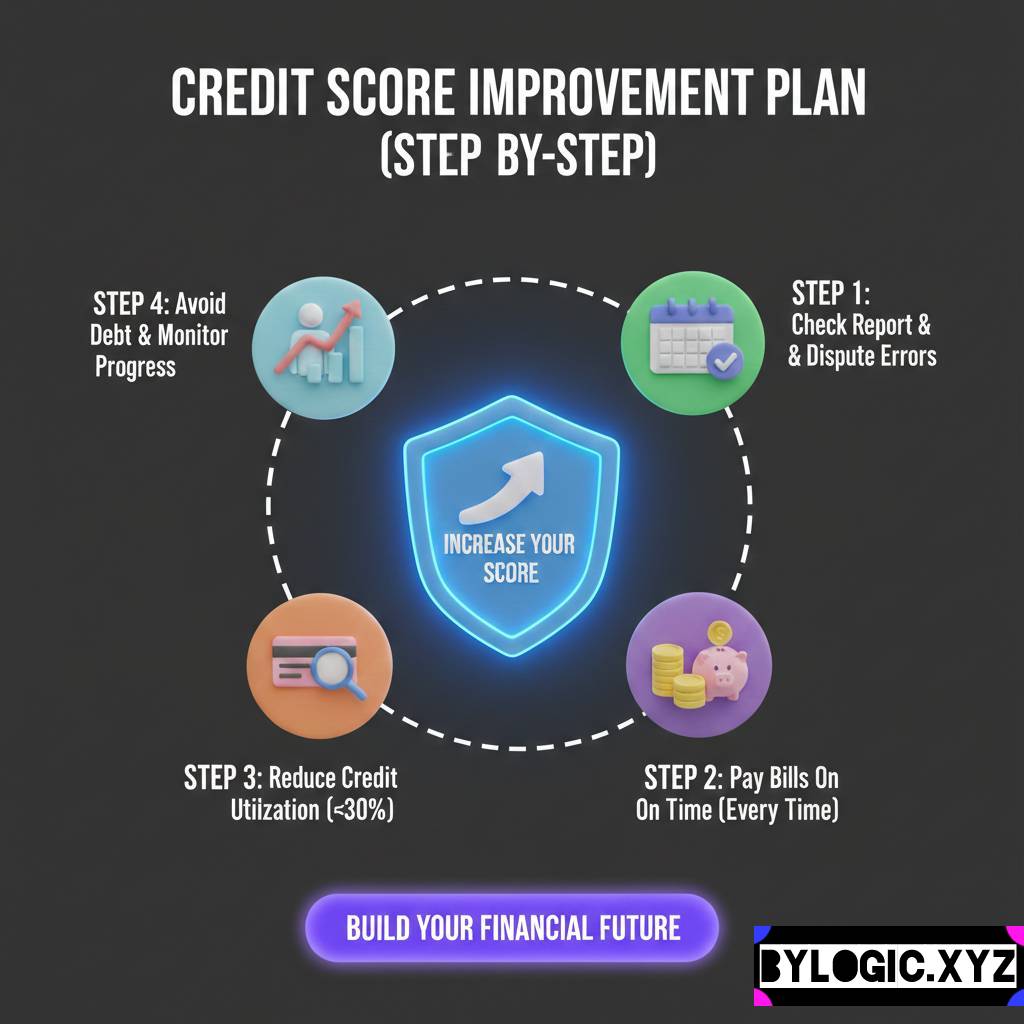
You know that feeling when you’re trying to get something done – maybe a new phone, a car, or even a house – and suddenly, your credit score plays spoilsport? Yeah, it’s frustrating. It feels like this invisible barrier that dictates what you can and can’t do. I’ve been there, staring at a less-than-stellar score, and figuring out the puzzle pieces. It’s totally doable to turn things around. Want Credit score improvement tips? Go ahead reading the article.
What Even is a Credit Score, Anyway?
YOU CAN ALSO READ:
SIP vs lumpsum investment during market highsBefore we dive into fixing it, let’s get on the same page about what we’re actually talking about. Think of your credit score as a report card for how you handle borrowed money. Every time you take a loan, use a credit card, or even pay your phone bill (sometimes!), that information is sent to credit bureaus. They then crunch these numbers to give you a three-digit score, usually ranging from 300 to 900.
Lenders use this score to figure out how risky it is to lend you money. A higher score means you’re a lower risk, which translates to better interest rates and easier approvals. A lower score? Well,that means higher interest, tougher approvals, or sometimes, no approval at all.
There are primarily three big credit bureaus in India: CIBIL, Experian, and Equifax. While they all aim to do the same thing, their scores might differ slightly because they might have slightly different data or scoring models. CIBIL is often the most commonly referred to. You can usually get one free credit report from each bureau annually. Take advantage of this! It’s the first real step in knowing where you stand.
The Nitty-Gritty: Your Step-by-Step Credit Score Improvement Plan
Alright, let’s roll up our sleeves. Improving your credit score isn’t an overnight magic trick. It’s a marathon, not a sprint.But with consistent effort, you will see results.
Step 1: Get Your Hands on Your Credit Report (and Really Read It!)
This is ground zero. You can’t fix what you don’t understand. As I mentioned, get your free annual reports from CIBIL,Experian, and Equifax. Once you have them, don’t just glance at the score.
- Scrutinize Every Detail: Are there accounts listed that you don’t recognize? Is an old loan showing as unpaid when you know you cleared it? Even small errors can drag your score down.
- Check for Identity Theft: Sometimes, unknown accounts could be a sign of identity theft. This is serious and needs immediate action.
- Understand the ‘Why’: Your report will usually show you factors impacting your score negatively. This gives you a roadmap. Are you missing payments? Is your credit utilization too high?
How to get your credit report: Credit score improvement
- Visit the official websites of CIBIL, Experian, or Equifax.
- Look for the “Get your Free Credit Score/Report” section.
- You’ll need to fill in some personal details and answer security questions.
- Download and save your report securely.
Step 2: Dispute Errors (Don’t Let Them Linger!)
If you find errors – and trust me, they happen more often than you’d think – dispute them immediately. Each credit bureau has a process for this. It might take a few weeks, but it’s crucial. Gather any documentation you have to support your claim (payment receipts, loan closure certificates, etc.).
Step 3: Payment History is King (Never Miss a Due Date)
This is the biggest piece of the pie when it comes to your score – roughly 30-35% of it! Missing even one payment can seriously hurt your score and stay on your report for years.
- Set Up Reminders: Use calendar alerts, banking app notifications, or even good old-fashioned sticky notes.
- Automate Payments: If you can, set up automatic payments for at least the minimum amount due on your credit cards and loan EMIs. This acts as a safety net.
- Prioritize Payments: If you’re really strapped for cash, make sure you pay your credit card and loan EMIs before anything else. Seriously. The late fees and interest are bad enough, but the impact on your credit score is worse.
Step 4: Keep Your Credit Utilization Low (Don’t Max Out Your Cards)
YOU CAN ALSO READ:
10 Silent Money Mistakes Destroying Your Future WealthThis is another huge factor, typically accounting for about 25-30% of your score. Credit utilization is the amount of credit you’re using compared to your total available credit limit.
- The Golden Rule: Try to keep your utilization below 30% of your credit limit. So, if you have a card with a ₹1,00,000 limit, try not to spend more than ₹30,000 on it.
- Why it Matters: Lenders see high utilization as a sign that you might be over-reliant on credit or struggling financially.
- How to Lower It:
- Pay off balances multiple times a month, not just once.
- If you can, pay more than the minimum due.
- Consider asking for a credit limit increase (but only if you trust yourself not to spend more!). A higher limit with the same spending automatically lowers your utilization.
Step 5: Maintain a Healthy Credit Mix (Show Variety)
Having a mix of different types of credit (like a home loan, a car loan, and a credit card) can actually be good for your score, making up about 10-15% of it. It shows you can responsibly handle various kinds of debt. However, this doesn’t mean you should take out loans just for the sake of it! Only borrow what you genuinely need.
Step 6: Don’t Close Old Credit Accounts (Unless Absolutely Necessary)
Your credit history length (around 15% of your score) plays a role. Older accounts, especially those with a good payment history, demonstrate a long track record of responsible borrowing. Closing an old card can shorten your average credit age and potentially reduce your total available credit, which could increase your utilization ratio.
- When Not to Close: If it’s an old card with no annual fees and a good history, keep it open, even if you just use it for a small recurring payment once in a while to keep it active.
- When to Consider Closing: If it has a high annual fee, or you’re tempted to overspend, then it might be worth considering. But always weigh the pros and cons.
Step 7: Be Smart About New Credit Applications (Don’t Go on a Binge)
Every time you apply for new credit, a “hard inquiry” is made on your credit report. A few hard inquiries within a short period can ding your score slightly (about 10% of your score). It signals to lenders that you might be desperate for credit.
- Shop Smart: If you’re looking for a loan, try to get pre-approved or research different lenders without actually submitting multiple applications.
- One at a Time: If you need a new credit card or a loan, apply for one, wait for the outcome, and then consider others if needed.
A Quick Example:
My friend, Rohan, was stuck with a CIBIL score of around 620. He was trying to get a home loan, and every bank was quoting him ridiculously high interest rates. We sat down, looked at his report. First, we found an old mobile phone bill showing as unpaid, which he had cleared years ago. We disputed that. Second, he was routinely maxing out his credit card – using almost 90% of his ₹50,000 limit. I told him to start paying it off twice a month, and bring that utilization down to under ₹15,000.
He also set up auto-pay for his personal loan EMI, which he had missed once. It took about 6 months of consistent effort, but his score jumped to 740, and he got a much better interest rate on his home loan. It wasn’t magic, just discipline.
Tools and Resources to Help You: Credit score improvement
- Credit Bureau Websites: As mentioned, use them for your reports and dispute resolution.
- Banking Apps: Many banks now offer a feature to check your CIBIL score directly within their app. This is super convenient for regular monitoring.
- Fintech Platforms: Apps like Paisabazaar, BankBazaar, or even services like OneScore offer free credit score checks and often provide insights into what’s impacting your score.
- Payment Reminders: Google Calendar, phone reminders, or dedicated budgeting apps can be a lifesaver.
Mistakes to Avoid Like the Plague:
- Ignoring your credit report: This is like driving blind.
- Making only minimum payments: While it prevents a late mark, it keeps you in debt longer and costs you more in interest.
- Co-signing loans for unreliable people: If they default, it affects your score. Period.
- Falling for “quick fix” credit repair scams: There are no shortcuts. It takes time and consistent effort.
Conclusion: Patience and Persistence are Your Best Friends
Improving your credit score is less about grand gestures and more about consistent, responsible financial habits. It’s about showing lenders that you can be trusted with money. It won’t happen overnight, but by regularly checking your report,paying on time, keeping utilization low, and being mindful of new credit, you will see your score climb. And when it does, the doors to better financial opportunities will start to open.
YOU CAN ALSO READ:
Personal loan rejection reasons banks never explainRemember, Please consult your financial advisor before taking any financial decision.
Explore more categories:
https://bylogic.xyz/category/digital-payments-banking-and-personal-finance-tools/
https://bylogic.xyz/category/insurance-life-and-health/