
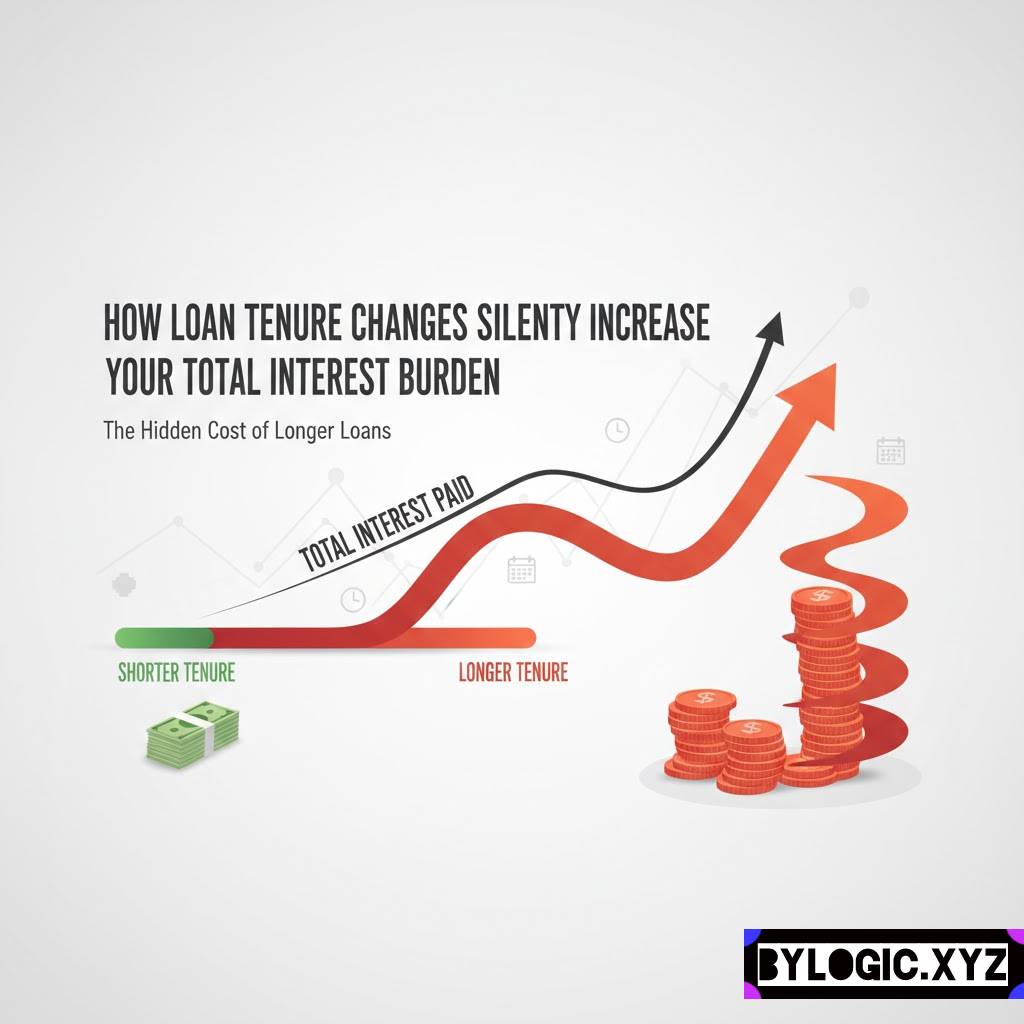
Received a text from your bank saying interest rates have gone up, but your EMI (Equated Monthly Installment) remains exactly the same? Most people see that and breathe a sigh of relief. “Thank god,” they think, “my monthly budget isn’t ruined.”
But here is the catch: the bank isn’t doing you a favor. They aren’t absorbing that extra cost out of the goodness of their hearts. Instead of taking more money from you today, they’ve quietly decided to take a whole lot more of it from you over the next five or ten years. They just stretched your loan tenure.
YOU CAN ALSO READ:
Index funds vs active funds: 10-year return realityIt’s a silent wealth killer. It’s like a slow leak in a tire; you don’t notice it while you’re driving, but eventually, you’re going to find yourself stranded.
The Story of the “No-Change” EMI
Let’s look at a guy named Amit. Amit took a home loan of ₹50 Lakhs at an 8% interest rate for 20 years. His EMI was roughly ₹41,827. Everything was fine for a couple of years. Then, the central bank raised rates, and Amit’s bank pushed his interest rate to 9.5%.
The bank gave Amit two choices (or sometimes, they just choose for you and send an SMS):
- Increase the EMI to about ₹46,600.
- Keep the EMI at ₹41,827 but increase the tenure.
Amit, like most of us, has kids’ school fees, groceries, and a car loan. He couldn’t suddenly find an extra ₹4,800 every month. So, he went with option two. He thought, “It’s just a few more years, dekh lenge (we’ll see).”
The Breakdown of the Trap
What Amit didn’t realize was that to keep that EMI the same, the bank didn’t just add a few months. They added years. In many cases, if the rate hike is significant enough, the interest part of the EMI becomes so high that the principal barely moves.
In Amit’s case, stretching that loan might have added another 8 to 10 years to his repayment schedule. Instead of finishing his loan at age 50, he’s now looking at age 60. And the total interest? He might end up paying back double the principal amount just in interest.
Why Banks Love the “Tenure Extension”
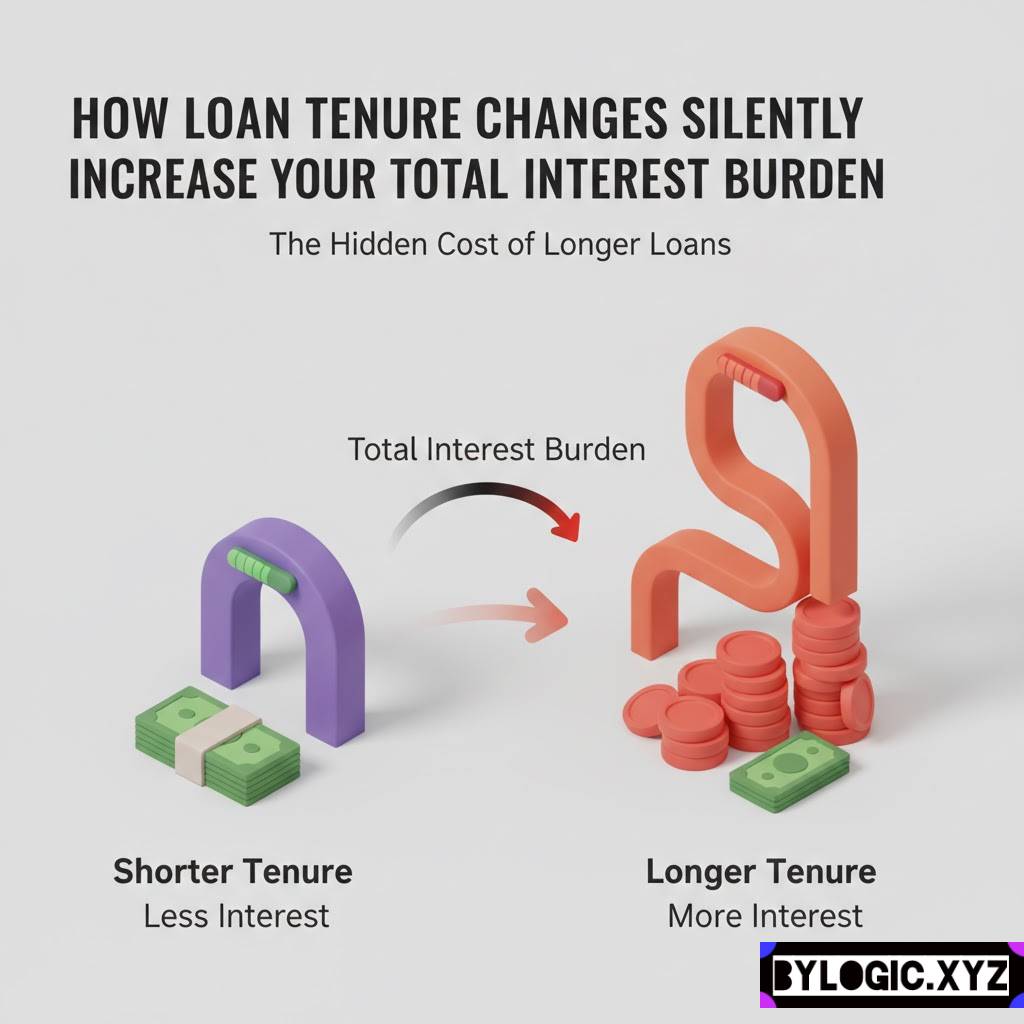
Banks prefer extending your tenure over increasing your EMI for a very simple reason: Retention and Psychology.
If they hike your EMI by ₹5,000, you’ll feel the “pain” immediately. You might start looking at other banks to transfer your loan (Balance Transfer). You’ll get annoyed. But if they just change a number on a statement changing “240 months remaining” to “310 months remaining” most people don’t even blink.
It’s “future money.” And our brains are wired to value today’s cash more than money we have to pay ten years from now. The bank knows this. By extending your tenure, they turn a 20-year profitable relationship into a 30-year goldmine.
The Math: It’s Not Just “Extra Months”
Let’s talk numbers, but not the boring textbook kind. Imagine you have a loan where you owe ₹40 Lakhs.
- Scenario A: You pay it off over 15 years at 9%. Total interest paid: ₹33 Lakhs.
- Scenario B: You get a rate hike, keep the EMI same, and the tenure jumps to 22 years. Total interest paid: ₹54 Lakhs.
That’s a ₹21 Lakh difference. That is the price of a luxury car, a child’s foreign education, or a very comfortable retirement fund gone, just because the tenure shifted “silently.”
Please consult your financial advisor before taking any financial decision, as every loan structure and individual tax bracket changes the “real” cost of debt.
How to Check if You’re Being “Tenure-Trapped”
Most people don’t even know they are in this trap until they check their annual loan statement. Here is how you can spot it:
- Check the ‘Principal vs. Interest’ split: Look at your latest EMI. If you find that 80% of your EMI is going toward interest and only 20% toward the principal, you are in the danger zone.
- Look at the “End Date”: Compare your original sanction letter with your current online portal status. Has the end date moved from 2040 to 2048?
- The “Negative Amortization” Nightmare: This is rare but happens during extreme rate hikes. Your interest requirement becomes higher than your EMI. This means your loan balance actually increasesevery month even though you are paying your EMI. It’s a debt spiral that is hard to escape.
How to Fight Back (A Practical Guide)
You don’t have to just sit there and let the tenure grow like a weed. You can take control.
YOU CAN ALSO READ:
Term insurance myths that cost families lakhs1. The “1% Prepayment” Rule
If you can, try to pay just 1% of your loan principal every year as an extra payment. If you have a ₹50 Lakh loan, that’s ₹50,000 a year. It sounds like a lot, but if you break it down, it’s about ₹4,000 a month. This small move can shave 4-5 years off your tenure.
2. Increase EMI Annually
Every year, most people get a salary hike (hopefully!). Use a portion of that hike to increase your EMI. Even a ₹1,000 or ₹2,000 increase in your monthly EMI can drastically pull back the tenure that the bank pushed out. Tell the bank, “I don’t want the old EMI. Increase it.”
3. Use Bonuses Wisely
When that Diwali bonus or performance incentive hits your account, don’t spend it all on a new iPhone or a vacation. Put 50% of it into your loan principal. Principal reduction in the early years of a loan is incredibly powerful because of how compounding works in reverse.
4. Switch Banks (If it makes sense)
If your current bank is charging 9.5% and another reputable bank is offering 8.7%, do the math. Calculate the processing fees and the “hassle factor.” Sometimes, a balance transfer is the only way to break the cycle.
Myth vs. Reality: The Loan Tenure Edition
| The Myth | The Reality |
| “Keeping the EMI same is better for my monthly budget.” | It saves your monthly budget but destroys your lifetime wealth. |
| “I’ll just pay it off in a lump sum later.” | Most people never do. Life gets in the way weddings, medical issues, upgrades. |
| “Banks are required to tell me if my tenure increases.” | They usually do, via a tiny link in an SMS or a hidden notification in the app. It’s on you to read it. |
| “Interest rates will eventually come down, so it’ll balance out.” | Rates might come down, but by then, you’ve already paid a mountain of interest on the higher rate. |
Why We Ignore the Silent Burden
Honestly, we ignore it because it’s invisible. If someone stole ₹5,000 from your wallet every month, you’d call the police. But when the bank adds 60 months to your loan, it’s just a number on a digital screen.
There’s also this psychological comfort in “fixed” costs. We like knowing that our EMI is ₹40k. It feels stable. But that stability is an illusion. Real stability is owning your home sooner and stopping the flow of interest to the bank.
I’ve talked to many people in their late 40s who are suddenly panicking because they realized their home loan will now outlast their career. They assumed they’d be debt-free by 50, but because of silent tenure hikes over the last decade, they are looking at 58 or 60. That’s a scary place to be when you want to start slowing down.
A Quick “How-To” for the Next Time Rates Hike
When you get that inevitable “Interest rates have been revised” message, don’t ignore it. Follow these steps:
- Log in to your loan portal immediately.
- Check the new ‘Outstanding Tenure’. Write it down.
- Run an online EMI calculator. Plug in your remaining principal and the new rate. See what the EMI should be to keep your original end date.
- Send an email to the bank. Explicitly ask them to increase your EMI instead of the tenure. They might ask for a new ECS mandate or some paperwork, but do it. It’s worth the half-day of effort.
- Ask for a “Reset”. Sometimes banks offer a conversion fee (a small percentage) to lower your interest rate to the current market rate for new customers. Ask for it.
Final Thoughts
Debt is a tool, but tenure is the handle. If the handle gets too long, you lose control of the tool.
The bank is a business. Their product is your debt. The longer you stay in debt, the better their product performs. Your goal is the exact opposite. You want to kill that debt as fast as possible so you can start building your own wealth instead of theirs.
Always keep an eye on that “Months Remaining” column. It matters much more than the “EMI Amount” column in the long run.
Don’t let your loan become a lifetime companion. It’s meant to be a temporary guest.
YOU CAN ALSO READ:
Floating vs fixed interest rates: when each actually makes senseAnd as always, please consult your financial advisor before taking any financial decision regarding loan restructuring or prepayments.
Explore more categories:
https://bylogic.xyz/category/digital-payments-banking-and-personal-finance-tools/
https://bylogic.xyz/category/insurance-life-and-health/